- Work Advice Made Simple
- Posts
- From Busy to Best: Make Yourself Useful, Not Just Active
From Busy to Best: Make Yourself Useful, Not Just Active
Three evidence-supported ways to actually make impact
🤷 “No One Teaches This at Work”
You forget how many skills you once had to learn.
Someone recently told me their new hires “don’t even know how to write a professional email” — so they have to teach them from scratch.
The truth is, most workplace skills are like this.
People rarely get good training on collaboration, leadership, or how to navigate complex teams. Instead, they’re left to figure it out on their own — or hope they get a great manager who actually coaches them.
More often, they pick up scraps from generic trainings, questionable LinkedIn posts, or random YouTube videos.
No surprise, then, that so many employees and managers struggle to juggle their workload, run projects, engage teams, and survive office politics — and few end up truly succeeding as a result.
So, what can you do today to improve your effectiveness?
What teaming skills should managers proactively learn so they can build high-performing teams?
How should organizations identify, develop, and promote managers—without becoming overly dependent on them?
Let's dive in.
FOR INDIVIDUALS
🧭 Stop Telling and Start Coaching
People often make two well-meaning mistakes
Giving too much advice
Caring too much about how things get done
Stop acting like a GPS barking turn-by-turn directions. Be a compass pointing to true north — that’s what good coaches do.
You don’t need a certification to coach. You just need to start (or double down).
Next time someone brings you a problem, skip the advice. Ask:
“What does success look like here?”
Repeat it back to check understanding.
Follow up with more questions:
“And what else?”
“Tell me more.”
“What do you think you’ll do next?”
“What does support look like for you right now?”
That’s it — you’re coaching.
People remember what they discover better than what they’re told. Help them find the answers — even if it’s not exactly how you’d do it.
The most immediately actionable and easiest to digest book on coaching I recommend is The Coaching Habit by Michael Bungay Stanier.
FOR MANAGERS & TEAM LEADS
🏆️ High-Performing Teams Aren’t Built on Vibes
People often think the best teams are the happiest — lots of laughs, fun outings, good vibes. This is not true.
Research shows the highest-performing teams have managers who do two things exceptionally well (Roles, Goals, A model, Nurses):
Keep roles clear
Keep goals front and center
Want the simplest, highest-impact ways to do that? Use this guide: Three Simple Alignment Tools for Busy Managers. Quick, practical tools to keep your team clear, focused, and moving forward without more meetings.
FOR ORGANIZATIONAL LEADERS
⚙️ Better Managers Start with Better Systems
Most organizations try to boost manager effectiveness by teaching management skills. The problem?
They assume knowledge = behavior. Knowing how to give feedback isn’t the same as doing it well, consistently.
They ignore the system. Even the best manager struggles in a culture that rewards reactivity, overloads teams, or punishes candor.
They isolate training from real work. Generic training rarely sticks if it doesn’t connect to daily tasks.
A better way?
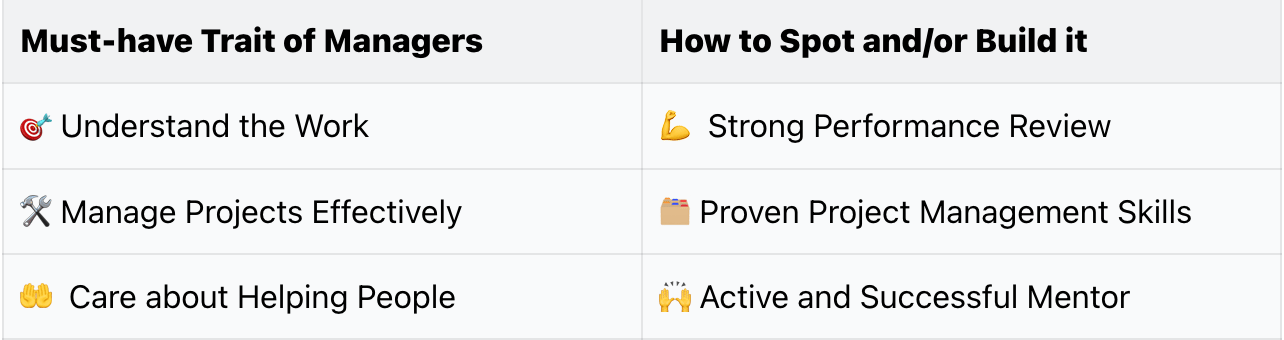
Keep what works: Performance reviews are a solid signal of who’s ready for more responsibility.
Add practical skills: Make basic project management a non-negotiable. Even a free certification makes a big difference — require it, track it.
Spot real coaches: Mentorship programs reveal who genuinely wants to help others grow. Use software to match mentors well, clarify goals, and track real engagement (not just sign-ups).
In short:
WHAT GETS MEASURED GETS ATTENTION
📊 No More Free Passes for Bad Management
We tie pay and bonuses to output and quality — why not do the same for people management?
A manager’s whole bonus shouldn’t hinge on team ratings, but they should have real skin in the game. Here’s one simple research-supported approach:
Each quarter, ask direct reports:
“I know what’s expected of me at work” — Yes, Somewhat, No
“To gain more clarity, I need…” — Role Clarity, Goal Clarity, Both, Neither
Use the results to set clear expectations with managers:
Mostly Yes → Recognize the manager.
Mostly Somewhat → Enable managers to tighten up.
Mostly No → Put part of their bonus at risk if it doesn’t improve next quarter.
👉️ Steal my pre-made Google Form by clicking HERE. Even if it is just for your own workgroup/team - this alignment check goes a long way.
➡️ Next Steps
Write down one thing you are going to do this week to better coach, clarify your or others roles/goals, and encourage others to do the same.
Check out The Leader Lab by Tania Luna and LeeAnn Renninger, PhD for more effectiveness tips. Leadership isn’t innate — it’s built through small, repeatable actions.
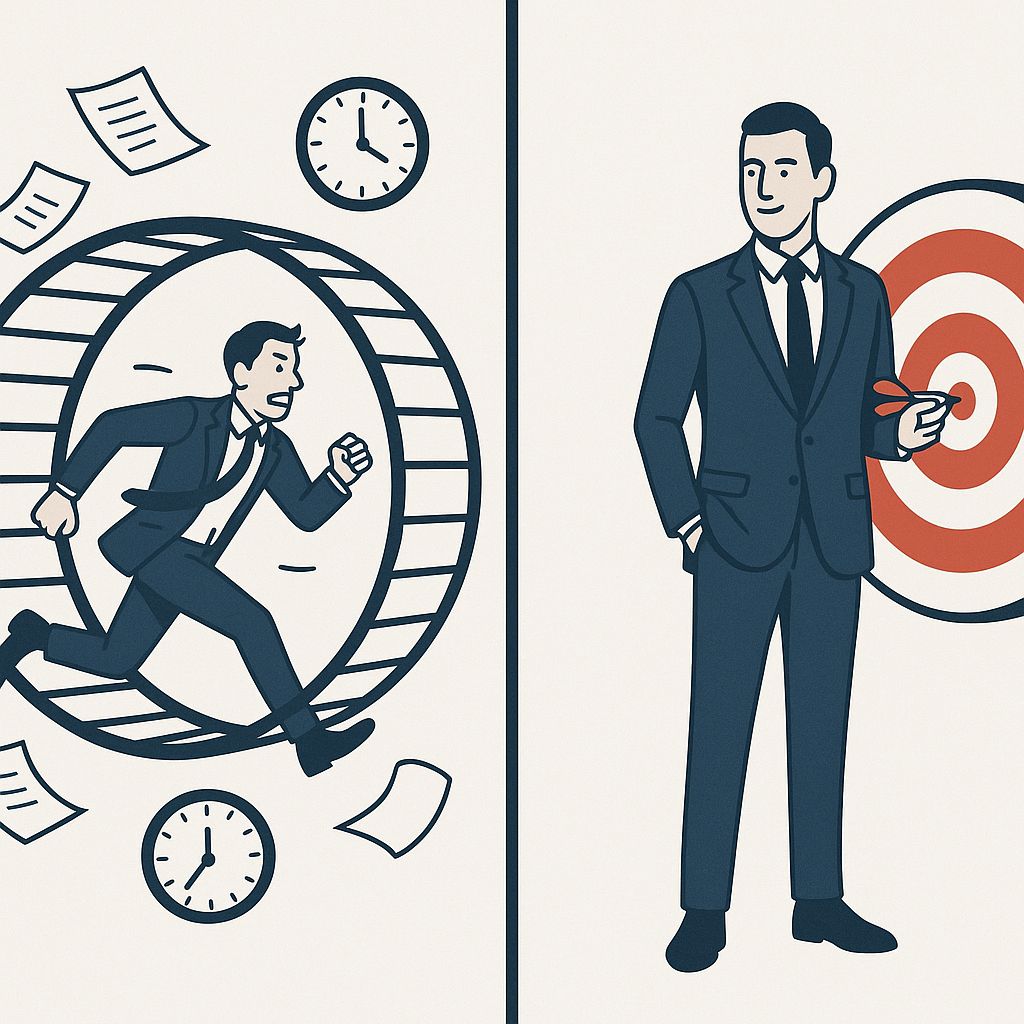
Reuse this thought: Stop being the busiest person in the room and start being the most valuable.
Share the newsletter if you thought something here was useful.
Thank you for subscribing and reading. I hope you have a great week!
Warmly,
Scott
p.s. Want to support me with Winning Weekly? If you’ve ever thought “Hey, this is actually useful,” then you can now contribute whatever feels right—or subscribe for a more tailored, inside-track kind of experience. A HUGE thanks if you do.